
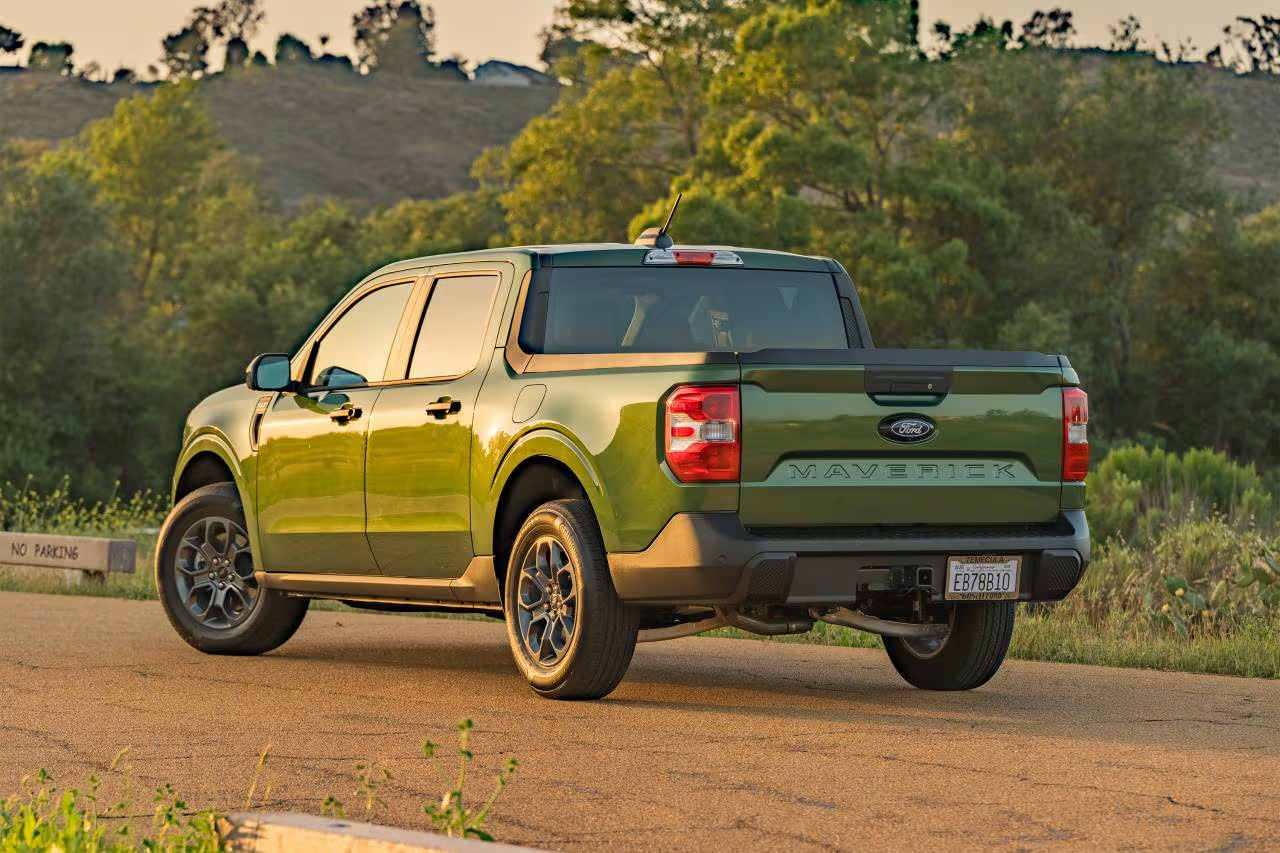
Ford Maverick Hybrid Truck Waitlist Now Stretching Beyond One Full Year
A long truck wait hits different when the vehicle is supposed to be the practical choice. For many US shoppers, the Ford Maverick Hybrid has become the answer to high gas prices, tight parking, weekend projects, and the need for a bed without stepping into a full-size payment. That is why the wait matters. It is not only about patience. It is about whether you should place an order, hunt dealer inventory, pay a markup, or move on. Ford lists the 2026 Maverick with a standard 2.5L full hybrid powertrain, available AWD, an EPA-estimated 42 MPG city rating, and up to 4,000 pounds of towing when properly equipped, which explains why the hybrid pickup truck keeps pulling in buyers who never planned to own a pickup. For more auto market coverage, US automotive trend reporting helps frame why this compact truck waitlist has become a bigger story than one model year.
Why the Ford Maverick Hybrid Wait Feels Longer Than a Normal Truck Delay
The frustration is not only that buyers are waiting. It is that the wait feels uneven. One shopper may find a dealer-stock unit two states away, while another sits on an order tied to a color, trim, package, or allocation pattern that moves at a crawl. Ford’s own inventory tools still point shoppers toward available dealer stock, which means this is not one national line with one clean date. It is a messy mix of demand, dealer supply, and build choices.
The wait is tied to the exact build, not only the truck
A base hybrid with front-wheel drive is not the same buying problem as an XLT hybrid with AWD, a luxury package, and the 4K Tow Package. The more exact the wish list, the smaller the pool. That does not mean the build is wrong. It means your order may be competing inside a narrower lane.
This is where many buyers misread the compact truck waitlist. They think they are waiting for “a Maverick.” In practice, they are waiting for their Maverick. A dealer may receive a trim you do not want, in a color you dislike, with options that push the payment higher than planned.
The counterintuitive part is simple. Being flexible can matter more than ordering early. A shopper willing to accept a different color or trim may beat someone who placed an order months earlier but locked into a rare build.
Dealers can make the same truck feel scarce or available
A buyer in Phoenix, Dallas, or Atlanta may see different inventory than someone shopping rural Pennsylvania or northern Michigan. Dealer allocation still shapes the experience. Large stores may get more chances at incoming units, while smaller stores may have fewer spots to work with.
This is why calling one dealer and hearing “one year” does not settle the whole market. It settles that dealer’s current position. A different store may already have a hybrid pickup truck inbound, though it may include add-ons, a higher trim, or a price that needs firm negotiation.
The smartest shoppers treat the search like a radius, not a hometown errand. Check nearby states, ask about incoming VINs, and get the out-the-door price in writing before driving. That single habit can save weeks, sometimes months.
The Demand Story Behind the Small Truck Crunch
The Maverick’s success is not a mystery. It lands in a gap that Detroit ignored for years. Many Americans wanted truck usefulness without the size, fuel bill, and garage stress of a full-size pickup. The hybrid version sharpened that pitch. It made the truck feel less like a splurge and more like a household tool.
Ford built the right size for the wrong moment in the market
New vehicle prices have pushed buyers into harder math. A compact pickup that can handle mulch, bikes, small furniture, jobsite gear, and daily commuting feels sensible when bigger trucks can price families out. The Maverick’s bed is not huge, but it is enough for many real weekends.
Ford reported 81,034 Maverick Hybrid pickups sold in 2025, up 17.9%, setting a sales record for the model’s hybrid version. That kind of growth turns small pickup demand into a supply problem, especially when the vehicle sits at the overlap of truck shoppers, hybrid shoppers, and former compact SUV owners.
Here is the odd part. The Maverick does not win by being the most truck-like truck. It wins by being less truck than many people thought they needed. That makes demand broader, not narrower.
Hybrid appeal grew because it asks less from the buyer
A full EV asks you to think about charging, home wiring, road-trip stops, and winter range. A standard hybrid asks you to drive. That lower mental load matters in the US, where plenty of shoppers like saving fuel but do not want a lifestyle change.
Reuters reported that Ford’s 2025 US sales rose 6%, helped by strong hybrid demand and the Maverick, while company hybrid sales reached a record 228,072 units. That wider shift gives the Maverick more momentum than a normal compact truck launch would have.
For shoppers comparing ownership math, a guide like hybrid vehicle ownership costs can help separate fuel savings from payment shock. A low fuel bill is helpful. It does not rescue a bad deal with dealer add-ons and inflated financing.
What Buyers Should Do Before Joining the Line
The wrong way to shop this truck is to fall in love with one build and then wait in silence. The better move is to decide what matters, what can bend, and what should kill the deal. That turns a vague wait into a controlled search.
Decide which options are worth waiting for
Start with use, not trim. If you tow a small camper or utility trailer, the 4K Tow Package may matter. Ford says the Maverick has a standard 2,000-pound tow rating and can reach 4,000 pounds when equipped with the optional 4K Tow Package. If you never tow, waiting longer for that package may be wasted time.
AWD is another pressure point. Snow-belt buyers in places like Minnesota, Wisconsin, and upstate New York may see it as a must. A shopper in central Texas may not. The feature is useful, but usefulness depends on the roads you drive.
Make a two-column list: “must have” and “nice to have.” Keep it short. The longer the first column gets, the more the wait controls you.
Treat markups as part of the wait time
A dealer markup is not separate from the wait. It is the price of skipping part of the line. Sometimes that price is worth refusing, even if the truck is sitting ten feet away.
Say you find an incoming unit with a $3,000 markup. Spread over five years, it may look small on a payment screen. But that money can erase a large chunk of the fuel savings that made the hybrid attractive in the first place. The deal starts fighting the reason you wanted the truck.
Use a simple rule. Compare the markup with the value of your time and the cost of alternatives. If you can wait six months and keep thousands in your pocket, waiting may be the better buy. If your old car is failing, the math changes.
The Better Alternatives If the Wait Gets Too Long
A year-long wait can push shoppers into emotional decisions. That is where mistakes happen. The better question is not “What else is close?” It is “What job did I need this truck to do?” Once you answer that, the backup list gets clearer.
Some buyers should consider a different Maverick first
The gas EcoBoost version may not deliver the same fuel story, but it can be easier to find in some markets. For buyers who drive fewer miles, the fuel gap may not matter as much as availability. That is not a downgrade if the monthly cost works.
A used Maverick can also make sense, though pricing needs care. Some lightly used units still carry strong resale values because small pickup demand remains high. Do not assume used means cheap. Compare it against a new order with patience built in.
A useful next step is reading a small truck buying guide before locking into one badge. The right backup may be a Maverick with a different powertrain, a Hyundai Santa Cruz, a used midsize truck, or even a compact SUV plus a small trailer.
Walking away can be the smartest truck-buying move
Scarcity can make a vehicle feel better than it is. That is human. When the line gets long, people start treating access like a prize. Dealers know this, and the market rewards urgency.
The non-obvious move is to set a walk-away number before you shop. Choose the maximum out-the-door price, the longest wait you will accept, and the few options you refuse to lose. Write them down. A written limit has more power than a feeling in a showroom.
If the deal breaks those limits, step back. The truck may be excellent, but no vehicle deserves unlimited patience and unlimited money at the same time.
Conclusion
The long wait says less about a single supply problem and more about how sharply this truck fits the current American buyer. People want lower fuel costs, real utility, easy parking, and a payment that does not feel reckless. That combination is rare.
The Ford Maverick Hybrid sits at that crossing point, which is why the line can stretch and still keep growing. But buyers should not treat the waitlist as destiny. A wider dealer search, a cleaner must-have list, and a firm price ceiling can change the outcome.
The best move is not always waiting. It is knowing what kind of waiting still protects your money. If the truck fits your life and the deal stays honest, stay patient. If the market turns the purchase into a trophy hunt, walk away with your budget intact.
Frequently Asked Questions
How long is the wait for a Maverick hybrid truck in the US?
Wait time depends on dealer allocation, trim, options, color, and how flexible you are. Some buyers may find dealer stock sooner, while a highly specific factory order can take far longer. Ask several dealers for incoming units, not only open order slots.
Is the Maverick hybrid worth waiting a year for?
It can be worth waiting if you drive many city miles, need light truck utility, and can buy without markup. It is less worth it if the dealer adds thousands over sticker or if you need a vehicle soon for work or family use.
Why is the compact truck waitlist so long?
Demand comes from several buyer groups at once: truck shoppers, fuel-conscious commuters, first-time pickup buyers, and former compact SUV owners. The truck’s size and hybrid setup widen its appeal, which can make certain builds harder to get quickly.
Should I pay a dealer markup to get one sooner?
Only consider it if the cost of waiting is higher than the markup. For many buyers, paying extra weakens the value story. Get the full out-the-door price, compare financing, and calculate how long fuel savings would take to recover the added cost.
Which Maverick trim is easiest to find?
Availability changes by region and dealer. In general, flexible buyers who accept different colors, trims, or packages have better odds. Ask dealers about incoming VINs and canceled orders, because those can appear before online inventory tools update.
Is AWD worth waiting for on the hybrid model?
AWD makes more sense in snowy states, rural areas, or places with steep roads and rough weather. For mild climates and mostly city driving, front-wheel drive may be enough. The better choice depends on your roads, not on resale talk alone.
What should I ask a dealer before placing an order?
Ask how many similar orders are ahead of yours, whether they expect allocation for your build, what fees or add-ons are required, and whether the price is locked in writing. A vague promise is not enough when waits are already stretched.
What is the best backup if the wait gets too long?
Start with your real need. If fuel savings matter most, compare compact hybrids and small SUVs. If bed utility matters most, look at gas Maverick inventory, used small pickups, or a midsize truck. The right backup is the one that solves the same job without wrecking your budget.